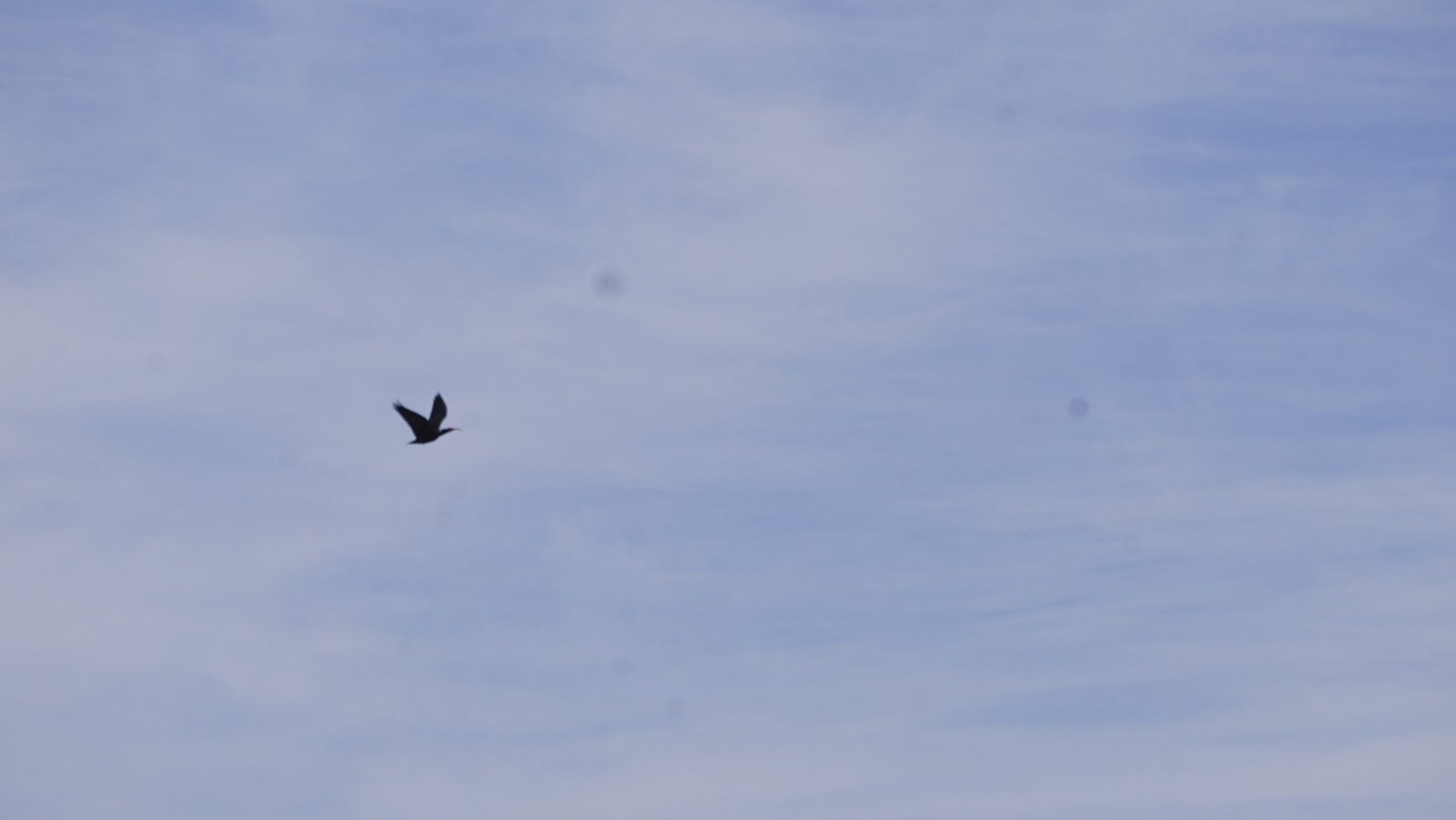
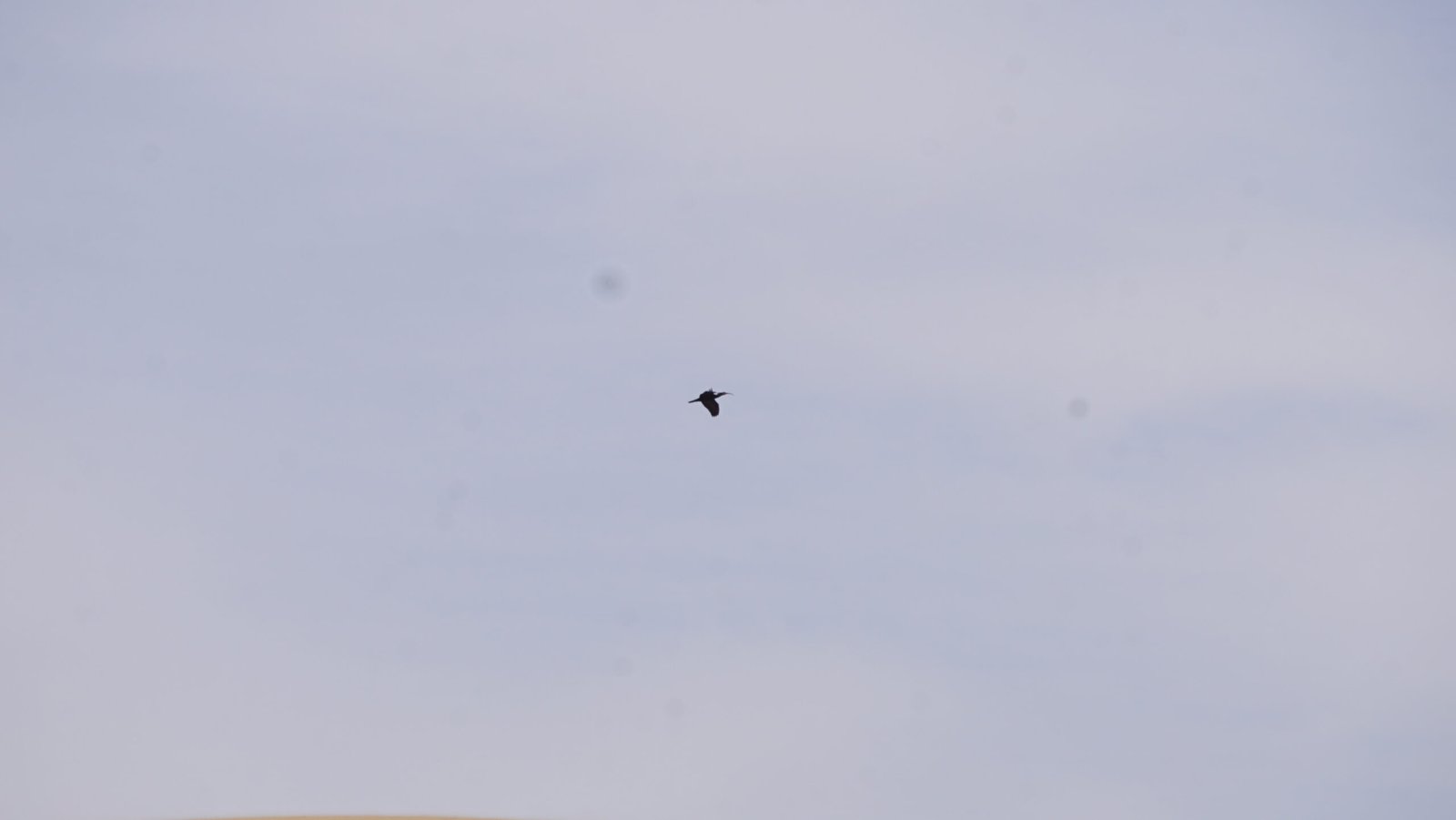
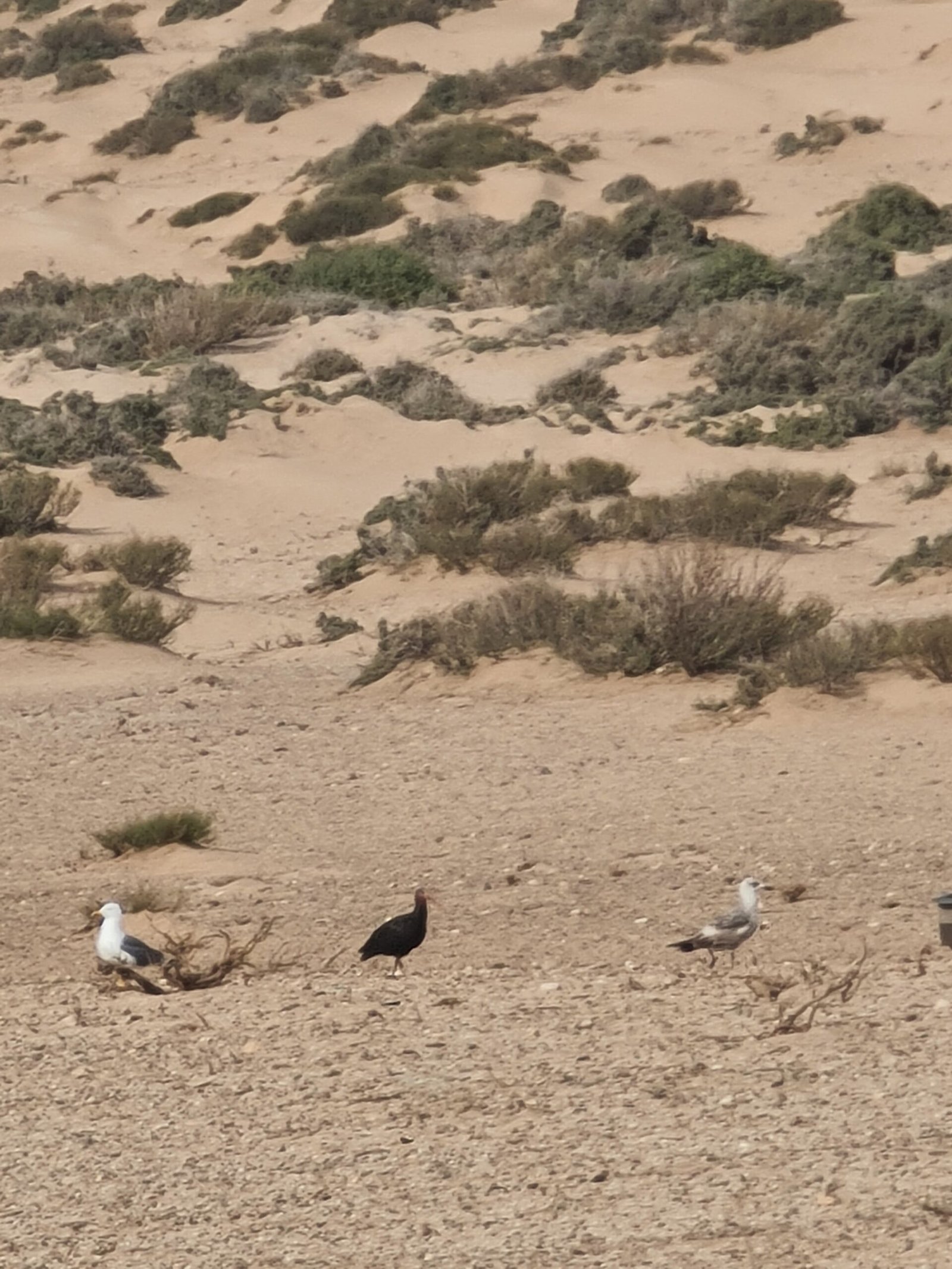
Most visitors come to Tamri for the dunes and the ocean. Very few know that the cliffs and steppe around our village shelter one of the rarest birds in the world: the Northern Bald Ibis (Geronticus eremita), called Waldrapp in German. Once found across North Africa, the Middle East and the Alps, it has almost disappeared — and the last truly wild colonies survive here, on the Atlantic coast of Morocco.
Quick facts
- Name: Northern Bald Ibis, Geronticus eremita (Waldrapp)
- Status: Endangered on the IUCN Red List (downlisted from Critically Endangered in 2018)
- Where it lives wild: two Moroccan colonies — Souss-Massa National Park and Tamri
- Population: about 708 birds across the two colonies in early 2019, after decades of protection
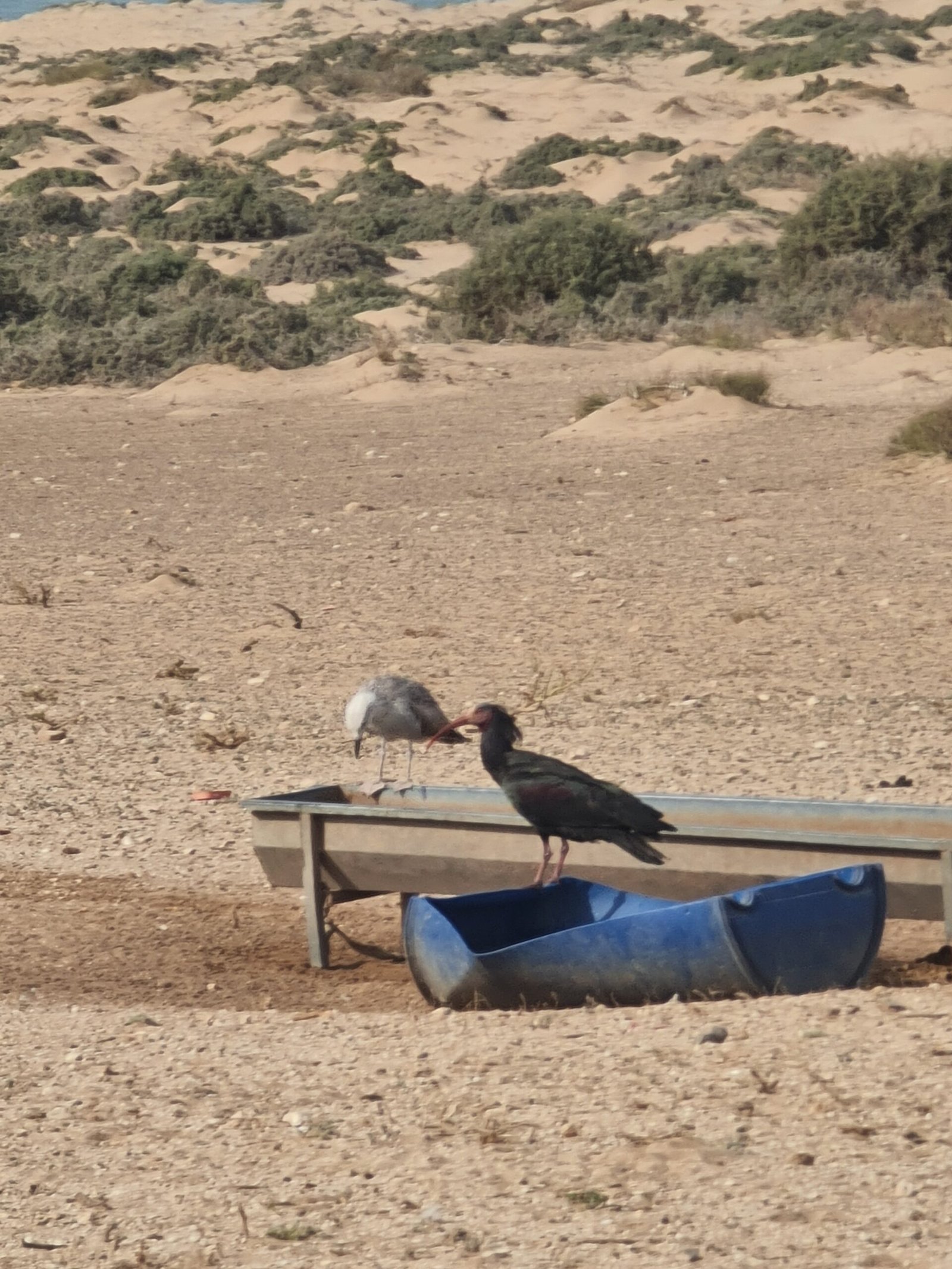
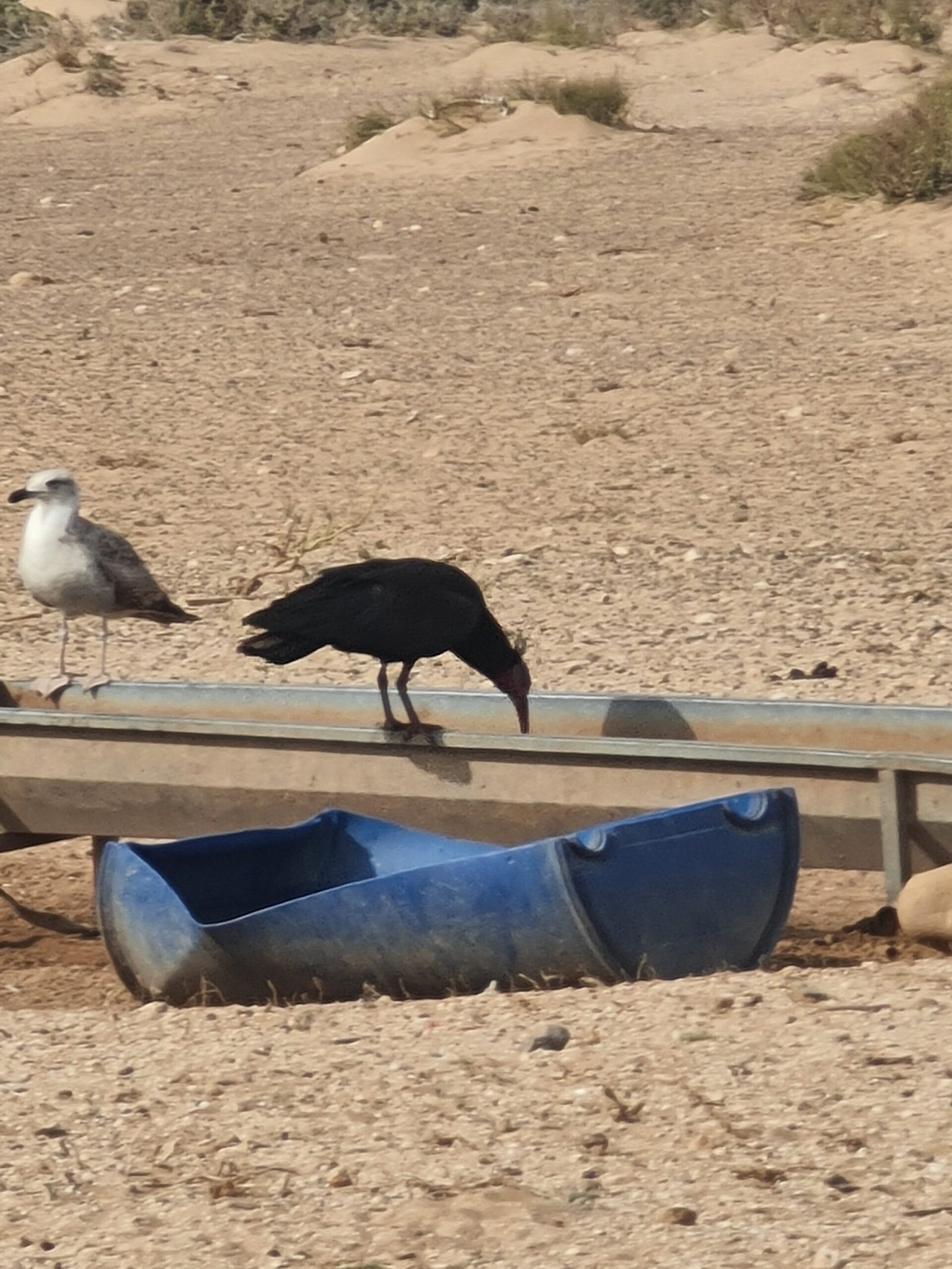
- Looks: 70–80 cm long, glossy black feathers with green and violet shine, a bald red face and a long curved red bill
Why the ibis of Tamri matter to the whole world
The Northern Bald Ibis declined by around 98% during the twentieth century. Its wild population in Turkey disappeared in 1992; birds there now live as a managed, semi-wild flock. A tiny migratory colony discovered in Syria in 2002 dwindled to a single pair, and no bird returned after 2014. Today, the birds you can see in Europe — in Austria and southern Spain — come from reintroduction projects.
That leaves Morocco. The colonies of Souss-Massa and Tamri are the last wild population that never disappeared. Every chick that fledges on these cliffs matters for the survival of the species.
A conservation success story — still fragile
In the 1990s the Moroccan population was small and vulnerable; in 1996 a sudden die-off killed 40 adults. Since then, wardens from the local communities, the National Park, and conservation partners including GREPOM (BirdLife in Morocco), SEO/BirdLife and the RSPB have protected the colonies: watching over nests, keeping disturbance away, providing fresh drinking water and protecting the feeding areas.
It has worked. Tamri alone had 60 breeding pairs in 2013, the highest since surveys began, and the two colonies together reached about 708 birds by early 2019. But a dry year, a predator or too many people near the cliffs can still ruin a whole breeding season — Tamri’s colony failed completely in the drought year of 2012.
How the ibis lives
- Nests on sea cliffs: colonies breed on undisturbed cliff ledges above the ocean. Pairs stay together for life and usually raise two or three chicks.
- Feeds on the ground: the birds walk in groups through sandy steppe and fallow fields, probing the soil with their long bills for beetles, lizards and other small animals.
- Stays all year: unlike the lost Syrian birds, the Moroccan ibis do not migrate far. After breeding they wander along the coast in flocks — the cool Atlantic fog helps them live here year-round.
Can you see the Northern Bald Ibis in Tamri?
Yes — often without trying. Outside the breeding season, small flocks feed in the open fields and steppe around Tamri, and patient visitors with binoculars regularly spot them. The breeding cliffs themselves are protected and must not be approached.
Watch the ibis the right way
- Never approach the nesting cliffs, especially in spring. Disturbance can make a whole colony abandon its nests.
- Keep your distance from feeding flocks — use binoculars or a zoom lens instead of walking closer.
- No drones near the coast and cliffs.
- Stay on tracks and don’t feed the birds.
- Respect the local wardens — they protect the colony every day.
Combine it with a stay in Timlalin
The ibis share this coast with the dunes, the fishermen and our family. Stay a night at Ajarif, our award-winning fisherman’s cabin, or join our guided walk through the dunes and canyon. Staying with us? Ask your hosts about the ibis — we grew up with them, and we’ll tell you the best respectful way to look for them during your visit.
Planning your trip? Read our guide on how to get to Timlalin from Taghazout, Agadir and Imsouane.
Frequently asked questions
Is the Northern Bald Ibis really that rare?
Yes. It is listed as Endangered, and the Moroccan colonies of Souss-Massa and Tamri are the last wild population that survived naturally. Other birds today live in managed or reintroduced groups.
When is the best time to see it?
The birds live here all year. Outside the spring breeding season, flocks feeding in the fields around Tamri are easier to see — and you avoid disturbing nesting birds.
Where else can I see it in Morocco?
Souss-Massa National Park, south of Agadir, holds the other colony.
Discover the wild coast of Tamri
Dunes, ocean, fishermen and one of the rarest birds on Earth — stay with a local family who has lived here for generations.
Plan & book your visitAsk us on WhatsAppSources: Wikipedia — Northern bald ibis · BirdGuides — Moroccan bald ibises on the up again (2013) · BirdGuides — record breeding season. Figures are the latest published counts we could verify; populations change every year.